
Introduction
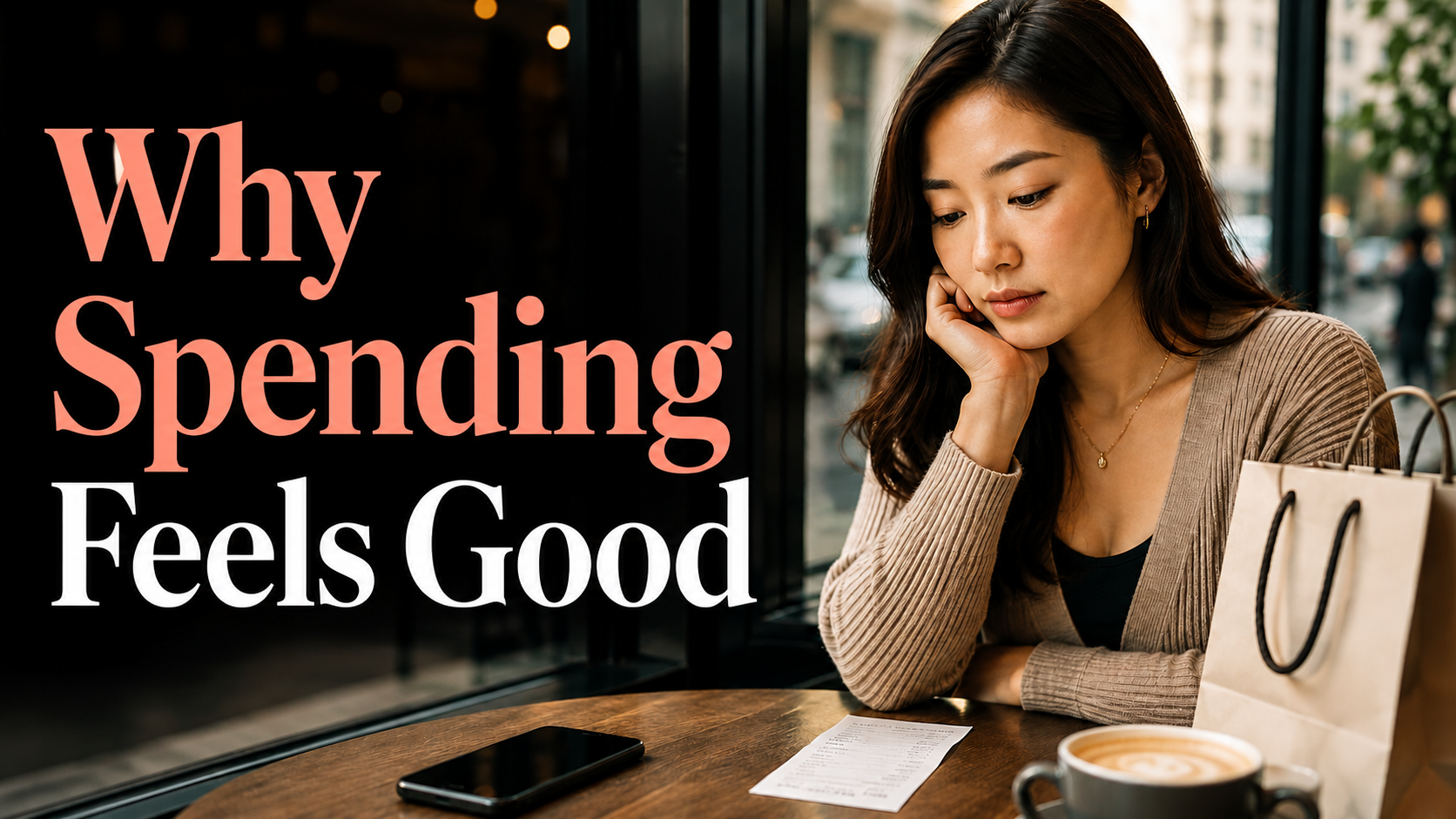
Emotional spending often begins with an ordinary moment rather than a dramatic financial decision. A difficult workday, caregiving fatigue, loneliness, boredom, insecurity, or the desire to celebrate can make a purchase feel like a quick way to change how the moment feels. The item may be useful or enjoyable, but the emotional state surrounding the decision can make buying feel more comforting, urgent, or meaningful than it would at another time.
The rewarding part may begin before checkout. Browsing creates possibility. Choosing restores a sense of direction. Completing the purchase can produce relief, excitement, or a brief feeling of control. Those benefits are not necessarily imaginary. Research suggests that shopping choices and self-treat purchases can sometimes improve mood. The financial evaluation, however, may change after the emotion becomes less intense.
Regret can appear when the same purchase is reconsidered beside a credit card balance, an unused item, an upcoming bill, or a savings goal. The decision that felt helpful in one emotional state may look different in another. This does not mean that every emotional purchase is harmful or that regret always follows. It means that an immediate emotional benefit and a later financial judgment can both be real.
This article explains the complete emotional spending psychology cycle: emotion or unmet need, anticipation, momentary reward, temporary relief, financial reassessment, and possible regret, guilt, or shame. It also shows how credit, Buy Now, Pay Later, shopping apps, and digital payments can accelerate the sequence—and how women can interrupt it without treating emotion as a character flaw or banning every enjoyable purchase.
Quick Answer
Shopping can feel good because anticipation, choice, and completion may provide stimulation, reward, or a sense of control. Regret may follow when the emotional intensity fades and the buyer reconsiders the full cost, debt, usefulness of the item, or conflict with another priority. Emotional spending becomes concerning when this sequence repeats, feels difficult to interrupt, creates secrecy or distress, or adds debt. The most practical response is to identify the expected emotional payoff, delay payment, make the total cost visible, add friction to checkout, and prepare another response that addresses the underlying need.
Key Insights
- Emotional spending is defined by the role buying plays in changing or managing a feeling—not by the product, price, or whether the item is technically useful.
- The rewarding process can start during anticipation, before ownership or payment.
- Shopping can sometimes provide genuine pleasure, relief, or a sense of control; these effects are not universal and do not prove that a purchase is financially appropriate.
- Regret often begins when the purchase is reevaluated under a calmer emotional state and compared with its full financial consequences.
- Productive regret evaluates a decision, guilt focuses on a behavior, and shame turns the behavior into a negative judgment about the person.
- Credit cards, BNPL, saved payment details, mobile wallets, and shopping apps can separate immediate reward from delayed cost.
- The goal is not emotion-free spending. It is to create enough time and visibility for emotional value and financial reality to be considered together.
1. What Emotional Spending Is—and Is Not
A practical definition
Emotional spending occurs when buying becomes a way to influence an internal state. A purchase may promise comfort after a difficult day, stimulation during boredom, reassurance after insecurity, recognition after hard work, or control during uncertainty. The purchase can still be useful. What makes it emotionally driven is the importance of the expected emotional change.
This is a practical description, not a medical diagnosis. Emotion influences most financial decisions, including healthy ones. A meaningful gift, a celebratory dinner, or something chosen simply for enjoyment can be emotional, affordable, and fully consistent with a person’s priorities.
The item and price do not reveal the pattern. A small purchase can be emotionally driven, while a much larger purchase can be carefully planned. The useful question is not simply, “Did I need this?” That standard can turn every discretionary purchase into a moral test. A better question is, “What did I expect this purchase to change about how I felt?”
The answer may reveal that the buyer wanted rest, reward, confidence, belonging, novelty, control, or relief. None of those needs is shameful. The financial question is whether buying was an affordable and effective response.
Emotional spending and impulse spending are different
Impulse spending describes a decision that is rapid or insufficiently planned. Emotional spending describes the function the purchase serves. A purchase can be both impulsive and emotional, but the categories are not interchangeable.
Someone might research an item for several days because imagining the purchase feels reassuring, then buy it after an upsetting event. The purchase was not instantaneous, yet emotion played a central role. Conversely, a small spontaneous purchase may be affordable and produce no regret. When speed, urgency, and checkout cues are the main problem, the HerMoneyPath guide to impulse spending triggers examines that mechanism more directly.
Emotional spending is not the same as compulsive buying
Ordinary emotional influence is common. Compulsive buying is a more specific and serious pattern involving persistent difficulty controlling purchases and meaningful harm or distress. A general educational article cannot determine whether someone has a clinical condition, and occasional emotional spending should not be labeled as one.
Professional support may be appropriate when spending repeatedly feels uncontrollable, is concealed, disrupts essential expenses, creates recurring debt, damages relationships, or causes significant distress. Seeking help does not require adopting a diagnosis or waiting for a crisis.
Financial context changes the consequence
The same $50 purchase can have very different effects depending on income, savings, debt, housing, healthcare, dependents, and job stability. For one woman, it may fit comfortably inside a personal-spending category. For another, it may reduce the money available for medication, a minimum payment, groceries, or an emergency fund.
The Federal Reserve’s Survey of Household Economics and Decisionmaking evaluates well-being through income, expenses, savings, credit, hardship, housing, care work, and people’s own assessment of their finances. That broad view matters because emotional spending happens inside a household financial reality—not outside it.
2. The Emotional Need and Expected Payoff
The cycle begins before the product appears
The first stage is usually an emotion, need, or situation—not a product. A person may feel depleted, lonely, overlooked, anxious, restricted, or eager to recognize an achievement. Shopping becomes attractive when it appears to offer a fast and available response.
Common emotional spending triggers include fatigue, boredom, conflict, celebration, social comparison, insecurity, and a desire for reward or control. Stress can also be a trigger, but it is only one pathway. The separate HerMoneyPath analysis of emotional spending under stress focuses on cases in which stress is the dominant mechanism.
The emotional payoff is often specific
“I wanted to feel better” may be true but too general to guide change. The expected payoff is often more precise:
- Relief: a break from worry, conflict, or overload.
- Reward: recognition after effort, sacrifice, or restraint.
- Control: one decision that can be completed when larger problems remain uncertain.
- Identity: feeling more confident, prepared, attractive, successful, or included.
- Connection: expressing affection, participating socially, or reducing loneliness.
- Stimulation: replacing boredom or emotional flatness with novelty and anticipation.
Identifying the expected payoff matters because different needs require different alternatives. Rest will not be replaced effectively by a complicated budgeting exercise. Loneliness may not respond to organizing a closet. An alternative is useful only when it addresses at least part of the original function.
Products can carry symbolic meaning
A purchase can represent more than the object itself. Clothing may symbolize confidence before an important event. Home items may represent order during a chaotic period. A professional purchase may represent a more capable future self. Gifts may represent love or adequacy.
These meanings are not necessarily false. Products and experiences can genuinely support expression, comfort, connection, and work. The risk appears when the symbolic promise becomes much larger than the item’s likely effect. A product may improve a morning routine, but it cannot reliably resolve burnout. An outfit may support confidence for an event, but it cannot create lasting security by itself.
Personal money stories can intensify the meaning. Statements such as “I never had nice things,” “I must look successful,” or “buying gifts is how I show love” can make a spending response feel necessary. Those beliefs deserve attention, but they are not the center of this article. The guide to money stories and emotional spending explores learned beliefs, identity, and financial narratives in greater depth.
For the immediate decision, one question is enough: “Am I buying primarily for the value of using this item, or for the feeling attached to imagining it?” A mixed answer is normal. The purpose is clarity, not self-accusation.
3. Why Shopping Can Feel Good
Anticipation can be rewarding before ownership
Browsing, comparing, imagining, selecting, and waiting for delivery can create anticipation. The buyer is not responding only to the object. She is responding to a possible change in comfort, identity, convenience, belonging, or mood.
In an experimental shopping task, Knutson and colleagues found that neural responses associated with anticipated gain and price-related discomfort helped predict immediate purchase decisions. The study does not show that every purchase follows one neural script. It supports a narrower conclusion: emotional and evaluative processes are active before checkout, and anticipation can be part of the decision.
Dopamine is not simply a pleasure chemical
Reward-related brain systems contribute to learning, motivation, attention, and expectations about valuable outcomes. Dopamine participates in those processes, but describing it as a substance that simply produces shopping pleasure is misleading. A purchase cannot be explained by one chemical or one brain region.
The practical point is less dramatic: the possibility of a rewarding outcome may feel vivid now, while a statement balance or reduced savings remains abstract. Knowledge about the budget and anticipation of relief can coexist. During a strong emotional moment, one may receive more attention than the other.
Choice can restore a sense of control
Many emotional triggers involve situations that are difficult to control: an employer’s decision, a family conflict, caregiving demands, health uncertainty, or rising costs. Shopping offers a structured sequence. The buyer compares options, makes a choice, approves payment, and receives confirmation.
In three experiments, Rick, Pereira, and Burson found that making shopping choices could reduce residual sadness and that restoration of personal control helped explain the effect. The finding supports the possibility that shopping can deliver a real emotional benefit. It does not establish that every mood improves, that a purchase is required, or that the benefit outweighs later debt.
Self-treats can improve mood without inevitable regret
Atalay and Meloy found that a negative mood could increase unplanned self-treat purchases, but the behavior was not simply mindless. Participants could still exercise restraint when restraint supported mood repair, and the purchases were not necessarily followed by guilt or regret.
This evidence is important because it prevents an overly moralized account of emotional spending. Buying something enjoyable is not automatically a mistake. The relevant distinction is whether the emotional benefit fits the person’s financial reality and remains acceptable after the decision is reconsidered.
Completion also provides an immediate result. Emotional problems are often ambiguous and slow to resolve. Shopping has a visible endpoint: order confirmed. That completion can shift attention and create a feeling of progress even when the original situation remains unchanged.
The item may also provide continuing value. A meal can create connection. A hobby purchase can support restorative activity. Comfortable clothing can improve daily life. Emotional spending psychology should not erase those benefits. It should help the buyer compare them with the complete cost rather than using the intensity of the moment as the only evidence.
4. Why Relief May Fade or Be Reassessed
The purchase may change attention faster than the situation
Shopping can redirect attention, introduce novelty, and create a completed action. It may not change the workload, insecurity, loneliness, relationship conflict, or exhaustion that preceded it. When attention returns to the original problem, the emotional benefit may feel smaller.
This does not mean that relief must always be brief. Research findings vary with the emotion, purchase, person, and setting. The accurate conclusion is that buying may improve mood, but it cannot be assumed to resolve the underlying condition or produce lasting satisfaction.
Anticipation and ownership are different experiences
Before checkout, an item can carry many imagined possibilities. After delivery, it becomes a specific object with a specific use. The buyer may discover that the strongest reward came from searching, imagining, receiving an offer, or waiting for the package rather than from owning the product.
This gap is not evidence of foolishness. People routinely make decisions using expectations about future experience. The useful review asks whether the item delivered the value that was expected and whether the anticipation caused that value to be overestimated.
Delayed costs become more concrete
The full financial consequence may not be emotionally vivid during the purchase. It becomes clearer when a credit card statement arrives, several BNPL payments overlap, the return deadline passes, or another expense competes for the same money.
Credit can widen the time gap between receiving the emotional benefit and experiencing the sacrifice. This does not make credit inherently harmful. It means that the reward may be immediate while the cost becomes real to the buyer later.
The purchase is evaluated from a different state
During the decision, comfort, excitement, urgency, or reward may dominate attention. Later, a calmer buyer may focus on usefulness, affordability, debt, and opportunity cost. The transaction has not changed, but the reference point has.
Regret becomes more likely when the later evaluation reveals a meaningful mismatch: the item was not used, the full price was overlooked, the purchase displaced a priority, or the emotional benefit was smaller than expected. If none of those problems exists, an emotionally meaningful purchase may remain satisfying.
Repeated relief can create a second source of pressure. When buying becomes the default response to discomfort, the original emotion may be joined by concern about balances, returns, secrecy, or household conflict. Spending then serves two roles in the cycle: it briefly reduces pressure and may later contribute to new pressure.
The pattern is especially consequential when financial margin is already limited. An affordable self-treat and a purchase that threatens an essential payment may arise from a similar emotional need, but their consequences are not equivalent.
5. The Complete Emotional Spending Cycle
Seven stages connect emotion to reassessment
A repeating emotional spending pattern can be understood as a sequence rather than a single failure at checkout:
- Emotion or need: discomfort, fatigue, boredom, insecurity, celebration, loneliness, or a desire for recognition.
- Anticipation: browsing and imagining make a product feel like a route to relief, reward, control, or identity.
- Purchase: the buyer completes the transaction, sometimes without making the total cost equally visible.
- Momentary reward: choice, novelty, completion, or ownership changes the emotional experience.
- Temporary reduction in discomfort: attention shifts or the original feeling becomes less intense.
- Financial reassessment: the buyer sees the purchase beside debt, bills, goals, usefulness, or another priority.
- Regret, guilt, or shame: the buyer learns from the mismatch, criticizes the behavior, or turns the decision into a judgment about herself.
The final reaction can create renewed pressure, which makes another fast source of relief more appealing. That is how a single purchase can become a self-reinforcing pattern.
The cycle is not inevitable
Not every emotional purchase passes through all seven stages. A person may notice the trigger and stop before browsing. She may complete a purchase that fits the budget and remains satisfying. She may feel mild regret, return the item, and adjust one rule without repeating the pattern.
The model is valuable because every stage creates a possible intervention point. Payment is not the only place where the cycle can change.
Repeated sequences become easier to follow
If a difficult meeting repeatedly leads to browsing, the connection becomes familiar. If late-night loneliness leads to ordering, the app is already available as a practiced response. Familiarity reduces the number of deliberate decisions required the next time the emotion appears.
This is not proof that the person has lost agency. It explains why information alone may be insufficient. A budget states what can be spent, but it does not automatically provide another response to loneliness, exhaustion, reward seeking, or uncertainty.
Small purchases can become one financial problem. Emotional purchases often feel separate because each responds to a different moment. Four unplanned $35 purchases equal $140 when the account is reviewed, even if none felt important alone. When financed on a revolving credit card, they also become part of one balance subject to the card’s repayment terms.
The risk comes from repetition and financing, not from a rule that small pleasures are irresponsible. A monthly review reveals the combined effect that emotional moments can hide.
Changing one stage can change the sequence
Naming the feeling changes the first stage. Closing the shopping app interrupts anticipation. A waiting rule delays the purchase. Calculating the full price changes reassessment before payment. Reviewing the result without self-attack prevents regret from turning into shame.
An effective plan does not require perfect self-control at every stage. It creates several small opportunities for the buyer to recover choice.
6. Productive Regret, Guilt, and Shame
Regret compares the decision with an alternative
Regret involves a comparison between what happened and what might have happened. The buyer imagines keeping the money, choosing a less expensive option, waiting until morning, paying debt, or buying something more useful. Research on regret regulation describes how these comparisons can influence later decisions.
Regret is productive when it becomes specific: “I wish I had reviewed the full BNPL schedule,” or “Purchases after 10 p.m. rarely feel worthwhile the next day.” A specific conclusion can become a safeguard.
Buyer’s remorse does not prove the purchase was irrational. A purchase can have provided real enjoyment or relief and still be regretted later. The conflict may arise because the short-term benefit and the long-term priority were both meaningful. Buyer’s remorse psychology is therefore not simply the disappearance of pleasure. It can be a new evaluation in which cost, usefulness, and forgone alternatives receive more weight.
The opposite is also possible. An emotionally motivated purchase may remain affordable and satisfying. Regret is a possible outcome, not an automatic consequence of emotion.
Guilt focuses on behavior
Guilt usually centers on an action: “I spent more than I planned,” or “I hid the purchase.” When proportionate to the situation, it can encourage repair—returning an item, discussing the balance, correcting the budget, or changing a rule.
Even guilt requires examination. A woman may feel guilty about an affordable personal purchase because she has learned to prioritize everyone else’s needs. Feeling guilty does not by itself prove that the spending was financially wrong.
Shame turns the purchase into an identity judgment
Shame shifts from behavior to the self: “I am irresponsible,” or “I cannot be trusted with money.” Research distinguishes this global self-judgment from guilt about a specific behavior. Shame is more likely to encourage hiding, defensiveness, avoidance, or helplessness than a clear corrective action.
The extended relationship among debt, secrecy, identity, and self-judgment is addressed in Money Shame in Women: Why Debt Stays Hidden. In this cycle, the essential point is that shame can become a new emotional trigger.
A non-punitive review still includes accountability
Reducing shame does not mean ignoring the balance. A useful review asks:
- What happened before the purchase?
- What emotional change did I expect?
- Was the complete cost visible?
- What did the purchase displace?
- Can it be canceled, returned, or repaid without new borrowing?
- Which one safeguard would make the next decision clearer?
Accountability becomes more practical when the buyer can examine the numbers without using them as evidence of permanent personal failure.
7. Credit, BNPL, and Digital Payment Environments
Digital shopping shortens the distance between feeling and payment
Shopping apps, stored addresses, saved cards, mobile wallets, and one-click checkout allow an emotional response to become a transaction within seconds. Convenience is useful, but it removes pauses that once required the buyer to find a card, enter information, or reconsider the decision.
The defining issue here is psychological timing. The environment can move the buyer from emotion to payment before the emotional payoff and financial consequence are considered together. The broader design problem is examined in the HerMoneyPath article on the hidden cost of credit card convenience.
Personalization keeps the emotional solution visible
Recommendations based on browsing, searches, engagement, and past purchases can present a highly relevant product when a trigger is active. Repeated notifications, abandoned-cart messages, and social media advertising keep anticipation alive even after the buyer leaves the store.
These systems do not force a purchase, and people respond differently. Their importance is that they reduce the work required to find a product connected to an insecurity, aspiration, or desire for reward.
Promotional urgency also changes the decision window. Countdowns, limited-time offers, low-stock messages, and discount events can make waiting feel like a loss. The question shifts from “Does this fit my needs and plan?” to “Will I lose the opportunity?”
That promotional mechanism is distinct from the emotional cycle itself. The guide to Black Friday debt psychology examines scarcity, discount framing, and event-driven urgency in more detail.
Credit separates receiving from paying
A credit card allows the buyer to receive the product before the purchase fully reduces cash. If the statement is not paid in full, the emotional moment can become part of a revolving balance. Interest then extends the financial consequence beyond the period in which the item provided reward.
Credit is not automatically harmful, and a card paid in full can be a practical payment method. The risk appears when delayed payment allows the current buyer to receive the benefit while assigning the sacrifice to a later version of herself.
BNPL fragments the cost
Buy Now, Pay Later commonly divides a retail purchase into smaller installments. A $25 payment can feel easier to evaluate than a $100 purchase, even though the full commitment remains $100. Several active plans can also make the combined obligation difficult to see.
The CFPB found that BNPL borrowers in its matched data were more likely to hold balances in other forms of unsecured credit. That is an association, not proof that BNPL caused those balances. The practical safeguard is to display the full price, all scheduled payments, every active plan, and the effect on future income before checkout. The article on BNPL hidden costs explains the financing risks in depth.
8. When Emotional Spending Creates Debt or Distress
Frequency matters more than one isolated purchase
One emotionally meaningful purchase does not establish a harmful pattern. Concern increases when the same connection appears repeatedly: conflict leads to shopping, fatigue leads to ordering, or every difficult week requires a financed reward.
A pattern becomes financially significant when purchases collectively reduce money for essentials, savings, minimum payments, or other priorities—even when each transaction appears small.
Warning signs deserve attention
Possible signs of harm include:
- feeling unable to pause or stop despite intending to do so;
- hiding purchases, balances, packages, or payment plans;
- using one form of credit to cover costs created by another;
- missing bills or reducing essential spending after discretionary purchases;
- keeping several BNPL plans or cards outside one complete financial view;
- repeatedly buying for relief and feeling distress soon afterward;
- experiencing significant conflict with a partner or family member;
- spending that interferes with work, relationships, housing, health needs, or daily functioning.
These signs do not diagnose a condition. They indicate that the consequences deserve a more structured response.
Women do not share one emotional or financial experience
Income, race, age, disability, employment, family structure, health, caregiving, and access to support all affect the meaning and consequence of a purchase. There is no single female emotional spending pattern.
Gender becomes relevant when social roles influence which spending feels legitimate. Money for children, relatives, work, or the home may be treated as responsible, while personal spending requires explanation. That hierarchy can make an affordable personal purchase produce guilt, or can delay personal needs until one purchase becomes an emotionally loaded form of compensation.
Caregiving and limited margin can intensify the cycle. A woman carrying substantial caregiving responsibilities may experience a personal purchase as one of the few available forms of autonomy or recognition. The need is real, but the product may not provide the rest, time, help, or connection she actually lacks.
Financial margin also changes risk. A woman managing variable income, divorce recovery, medical costs, or retirement catch-up may experience greater consequences from repeated purchases. Structural pressure and emotional decision-making can operate at the same time; acknowledging one does not erase the other.
Professional and financial support have different roles
A licensed mental health professional can help when emotional triggers, loss of control, secrecy, conflict, or distress are central. A reputable nonprofit credit counselor can help organize income, expenses, balances, interest, and repayment options. One form of support does not replace the other.
The CFPB recommends examining a credit counseling organization’s services, fees, educational resources, and approach before enrolling. A trustworthy provider should understand the person’s complete situation rather than immediately pushing one solution.
9. How to Interrupt the Cycle Without Shame
Track the sequence for two to four weeks
A short spending log can make the pattern visible. Focus on unplanned discretionary purchases or decisions that create uncertainty. Record:
- time and situation;
- emotion or unmet need;
- item and total price;
- payment method;
- expected emotional payoff;
- reaction the next day;
- whether the item was used, returned, or financed.
The purpose is not to monitor every necessity or create evidence for self-criticism. It is to identify repeated combinations such as late-night shopping, social media exposure, conflict, payday, fatigue, or a particular payment method.
Compare the pattern, not the product. The following questions help distinguish sustainable discretionary spending from a pattern that may be creating financial or emotional harm:
| Question | Planned or sustainable discretionary spending | Possible harmful emotional pattern |
|---|---|---|
| What started the decision? | Interest, usefulness, enjoyment, or a need already considered. | A strong feeling repeatedly makes buying appear to be the fastest relief. |
| Was the full cost visible? | Total price and effect on current priorities were considered. | Attention stayed on a discount, installment, reward, or immediate payoff. |
| Could the decision wait? | Waiting would not fundamentally change the choice. | Delay feels unusually uncomfortable or threatens the expected relief. |
| How was it funded? | The cost fits available money without displacing essentials or agreed goals. | The purchase adds a balance, overlaps with other plans, or depends on uncertain income. |
| How does it feel later? | The purchase remains useful, affordable, or enjoyable. | Regret, concealment, avoidance, or repeated returns follow. |
Use a six-question pause
- What am I feeling or trying to change right now?
- What do I expect this purchase to make me feel?
- Would using the item provide that value, or is most of the reward in imagining and buying it?
- What is the full cost, including tax, installments, interest, fees, and related purchases?
- Which current priority receives less money if I buy it?
- Would I still choose this after resting, eating, leaving the app, or waiting until tomorrow?
The questions are not designed to force a “no.” They move the decision from an automatic sequence into a deliberate one.
Add a waiting period that fits the financial impact
A tiered waiting rule can be more realistic than applying the same delay to every purchase. For example, someone might wait until the next morning for a small unplanned purchase, 48 hours for a medium purchase, and review any larger purchase against the monthly plan before paying.
The amounts should reflect personal income, obligations, and margin. Save the item and price to a list, then leave the shopping environment. Reopening the page repeatedly can keep anticipation active.
Create friction before the trigger appears
- Remove saved payment information from retail sites and apps.
- Turn off sale, shopping, and abandoned-cart notifications.
- Unsubscribe from promotional emails or move them to a separate folder.
- Delete the apps most connected to unwanted purchases.
- Keep every card balance and BNPL payment on one visible page.
- Use a written list for planned purchases and replacements.
- Avoid browsing when tired, distressed, or unable to sleep.
Friction does not prohibit spending. It gives the buyer enough time to notice which stage of the cycle is occurring.
Replace the function, not only the transaction
An alternative should correspond to the need. Rest may help fatigue. Contact with another person may help loneliness. Writing down the problem may restore direction. A walk or change of environment may reduce agitation. A low-cost ritual can recognize an achievement.
The alternative does not need to reproduce the excitement of shopping. It needs to create enough distance for the emotional intensity to change. Preparing a short personal list in advance is more useful than inventing an alternative at the strongest point of the urge.
Plan enjoyment instead of imposing total restriction. A realistic personal-spending category allows pleasure without requiring every purchase to be defended. The amount should fit essentials, minimum payments, agreed savings, and the household’s actual financial position.
If current finances do not allow discretionary spending, the emotional need still deserves attention through free or lower-cost alternatives. The answer is not pretending that the need does not exist or using shame to enforce the budget.
Review the outcome without punishment
After a purchase that creates regret, address the practical issue first. Check the cancellation or return deadline, payment method, due dates, refund process, and effect on the monthly total. Then identify the trigger, expected payoff, and missing safeguard.
Choose one specific adjustment. “No checkout after a conflict” is actionable. “I will never make another bad decision” is not. A small rule that is consistently used provides more protection than an extreme plan that cannot be sustained.
Frequently Asked Questions
Why does shopping feel good?
Shopping can create anticipation, novelty, choice, reward, and a sense of completion or control. The emotional benefit may begin while browsing, before the item is owned. Research suggests that shopping decisions and self-treats can sometimes improve mood, but the outcome varies and does not determine whether the purchase is affordable.
What commonly triggers emotional spending?
Possible emotional spending triggers include fatigue, boredom, loneliness, conflict, insecurity, celebration, social comparison, stress, and a desire for reward or control. The most useful evidence is not one feeling but a repeated connection between a situation and buying.
Is emotional spending always harmful?
No. Emotion influences most purchases, and an emotionally meaningful purchase can be affordable, useful, and satisfying. Concern increases when the pattern repeatedly overrides the full cost, adds debt, displaces essential priorities, feels uncontrollable, or leads to secrecy, conflict, or distress.
Why do I feel guilty after shopping?
Guilt after shopping may appear when a purchase conflicts with a plan, value, or obligation. It may also reflect an unrealistic belief that personal spending is always undeserved. Review the actual affordability and consequence before deciding what the feeling means. Productive guilt focuses on a correctable behavior; shame turns the event into a judgment about personal worth.
What is the difference between emotional and impulse spending?
Emotional spending is defined by the purpose buying serves, such as relief, reward, or control. Impulse spending is defined by speed or insufficient planning. A purchase can be both, but an emotional purchase may be considered for days, and a spontaneous purchase may be affordable and harmless.
How can I stop emotional spending?
Identify the expected emotional payoff, pause before payment, calculate the complete cost, add a waiting period, remove saved cards and shopping notifications, and prepare another response that fits the trigger. Track patterns for several weeks and change one repeated part of the sequence rather than relying on shame or total restriction.
When should I consider professional support?
Support may be useful when spending feels difficult to control, is concealed, repeatedly creates debt, interferes with essential expenses, causes significant conflict, or produces substantial distress. A licensed mental health professional can address emotional and behavioral concerns, while a reputable nonprofit credit counselor can help evaluate debt and repayment options.
Conclusion
Emotional spending is not defined by a particular product or price. It begins when buying becomes an important way to change a feeling. Anticipation can create possibility, choosing can provide control, and completing a purchase can deliver genuine enjoyment or relief.
Regret may appear later when the emotional intensity decreases and the purchase is compared with its complete financial effect. The sequence is not universal: some emotional purchases remain satisfying and affordable. The risk lies in a repeated mismatch between short-term emotional reward and longer-term priorities.
The most effective response is neither denial nor punishment. It is to make the sequence visible: identify the need, name the expected payoff, delay payment, restore the full cost, add checkout friction, and prepare another response. Productive regret can then become information rather than evidence of personal failure.
The goal is not perfect control or emotion-free spending. It is a financial process in which enjoyment can be planned, emotional needs can be acknowledged, and buying no longer has to carry the entire burden of providing relief, reward, identity, or control.
Research Context
This article combines evidence from consumer psychology, decision research, neuroeconomics, emotion regulation, and U.S. household finance. These fields answer different questions and should not be treated as one unified causal model.
Knutson and colleagues used an experimental shopping task to examine neural activity before immediate purchase decisions. The findings support the involvement of anticipatory and price-related processes, but they do not show that every purchase follows the same neural sequence or that dopamine alone causes buying.
Atalay and Meloy found that negative mood could increase self-treat purchases and that those purchases were not inevitably followed by guilt or regret. Rick, Pereira, and Burson found that making shopping choices could reduce residual sadness through restored personal control. These studies support the possibility of genuine mood benefits, but their experimental settings do not establish long-term effects on debt, repeated spending, or household well-being.
The emotional spending cycle presented here is an educational framework that organizes possible stages of a repeated pattern. It is not a validated diagnostic instrument and does not imply that every emotional purchase ends in regret. Emotional spending, impulse spending, and compulsive buying can overlap, but they are not interchangeable.
The Federal Reserve’s 2025 Survey of Household Economics and Decisionmaking describes U.S. financial conditions involving income, expenses, care work, savings, hardship, banking, credit, and housing. The CFPB’s 2025 BNPL study links data from six large providers with de-identified credit records. These sources provide financial context and associations; they do not prove that financial strain, credit, or BNPL causes emotional spending in a particular person.
Experiences vary by income, race, age, disability, employment, state, family structure, caregiving, health, debt, and access to financial services. Product terms, fees, consumer protections, and institutional guidance may change. Readers should verify current information with providers and qualified professionals when making individual decisions.
Disclaimer
This content is for educational and informational purposes only. It does not provide individualized financial, investment, legal, tax, credit, debt, medical, or mental health advice and does not diagnose any condition.
Financial and emotional circumstances vary. Decisions involving spending, credit, debt, repayment, or professional support should be evaluated in light of personal income, obligations, family responsibilities, health, goals, and applicable terms or laws. Rates, fees, rules, benefits, and product conditions may change.
HerMoneyPath does not guarantee financial, behavioral, or emotional outcomes. When appropriate, readers may seek guidance from a qualified financial professional, reputable nonprofit credit counselor, attorney, tax professional, or licensed mental health professional.
References
Atalay, A. S., & Meloy, M. G. (2011). Retail therapy: A strategic effort to improve mood. Psychology & Marketing, 28(6), 638–659. https://doi.org/10.1002/mar.20404
Board of Governors of the Federal Reserve System. (2026). Report on the Economic Well-Being of U.S. Households in 2025. https://www.federalreserve.gov/publications/2026-economic-well-being-of-us-households-in-2025-executive-summary.htm
Consumer Financial Protection Bureau. (2025). Consumer Use of Buy Now, Pay Later and Other Unsecured Debt. https://www.consumerfinance.gov/data-research/research-reports/consumer-use-of-buy-now-pay-later-and-other-unsecured-debt/
Consumer Financial Protection Bureau. (n.d.). What Is Credit Counseling? https://www.consumerfinance.gov/ask-cfpb/what-is-credit-counseling-en-1451/
Gross, J. J. (2015). Emotion regulation: Current status and future prospects. Psychological Inquiry, 26(1), 1–26. https://doi.org/10.1080/1047840X.2014.940781
Knutson, B., & Bossaerts, P. (2007). Neural antecedents of financial decisions. Journal of Neuroscience, 27(31), 8174–8177. https://doi.org/10.1523/JNEUROSCI.1564-07.2007
Knutson, B., Rick, S., Wimmer, G. E., Prelec, D., & Loewenstein, G. (2007). Neural predictors of purchases. Neuron, 53(1), 147–156. https://doi.org/10.1016/j.neuron.2006.11.010
Rick, S. I., Pereira, B., & Burson, K. A. (2014). The benefits of retail therapy: Making purchase decisions reduces residual sadness. Journal of Consumer Psychology, 24(3), 373–380. https://doi.org/10.1016/j.jcps.2013.12.004
Tangney, J. P., Stuewig, J., & Mashek, D. J. (2007). Moral emotions and moral behavior. Annual Review of Psychology, 58, 345–372. https://doi.org/10.1146/annurev.psych.56.091103.070145
Zeelenberg, M., & Pieters, R. (2007). A theory of regret regulation 1.0. Journal of Consumer Psychology, 17(1), 3–18. https://doi.org/10.1207/s15327663jcp1701_3