Introduction
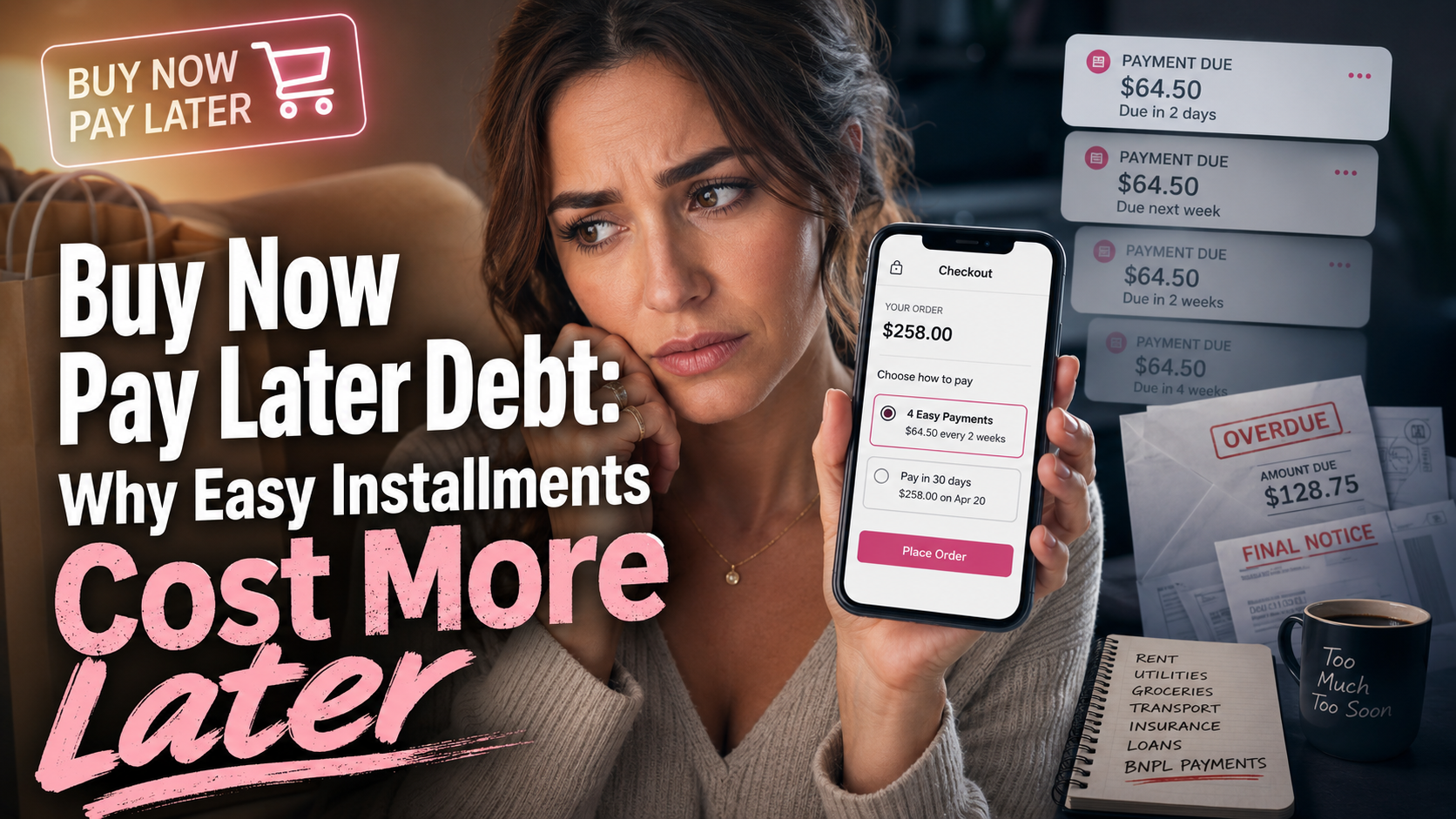
A $240 purchase can look very different when checkout displays four payments of $60. The item has not become cheaper, but the immediate decision feels smaller. That difference is the appeal of Buy Now, Pay Later—and the reason its real cost can be easy to underestimate.
BNPL can be useful when a planned purchase has a fixed schedule, no interest, clear return terms, and payments that fit comfortably beside essential bills and savings. It becomes riskier when several plans overlap, autopay reaches an underfunded account, a refund is delayed, or future income is committed before the household sees the full total.
For women balancing housing, caregiving, transportation, health costs, family responsibilities, and uneven income, the important question is not whether one installment appears affordable. It is whether the entire purchase—and every other scheduled payment—fits the complete budget without weakening financial margin.
This guide compares BNPL with credit cards, explains the hidden costs behind interest-free language, clarifies possible credit-reporting effects, and provides a practical framework for deciding when paying later may create more pressure than flexibility.
Quick Answer
Buy Now, Pay Later is not automatically safer than a credit card. A fixed, interest-free BNPL plan may cost less than carrying a high-interest card balance, but overlapping installments, late or bank fees, refund delays, and evolving credit-reporting practices can create different risks. The safer option is the one with the lower total cost, clearer protections, and a repayment schedule that fits the full budget.
Key Insights
- BNPL is a form of credit: receiving the purchase now means committing future income, even when the plan charges no interest.
- The installment shown at checkout can reduce attention to the total price, making an optional purchase feel more affordable than it is.
- Multiple plans become difficult to manage because providers, due dates, payment methods, returns, and autopay withdrawals may be scattered across accounts.
- An interest-free plan can still produce costs through late charges, overdraft or non-sufficient-funds fees, lost savings capacity, and reduced budget flexibility.
- BNPL credit reporting is evolving, so the effect on a credit file or score depends on the provider, credit bureau, scoring model, and whether an unpaid balance reaches collections.
- BNPL should generally be avoided when repayment depends on uncertain income, conflicts with essential bills, or requires another form of debt to complete the schedule.
Buy Now, Pay Later vs. Credit Cards: Which Is Safer?
Neither BNPL nor a credit card is automatically safer. A short, fixed, zero-interest BNPL plan may be less expensive than carrying a credit-card balance at a high annual percentage rate. A credit card may be easier to track in one statement and may provide different dispute, refund, and fraud procedures. The safer choice depends on total cost, repayment certainty, protections, and the shopper’s full financial situation.
The comparison below describes common patterns, not universal rules.
Federal Reserve research published in 2026
shows that BNPL now includes traditional pay-in-four plans as well as other short- and longer-term installment products, and provider terms vary. Credit-card terms also vary by issuer and account.
| Decision Factor | Typical BNPL Consideration | Typical Credit-Card Consideration |
|---|---|---|
| Interest and price | Many pay-in-four plans charge 0% APR, but not every BNPL product is interest-free. | Paying the statement balance in full can avoid interest; carrying a balance may become expensive. |
| Repayment structure | Usually fixed installments over a short period, which can make the payoff date clear. | Revolving credit permits minimum payments, which offers flexibility but can extend repayment. |
| Visibility | Several plans across apps and merchants can fragment the total obligation. | Purchases generally appear on one account statement, though the revolving balance can obscure the cost of individual items. |
| Late and bank fees | A failed autopay may lead to provider consequences and may also interact with overdraft or non-sufficient-funds policies. | Late fees and interest may apply under the account agreement; bank-account fees can also arise when paying the bill. |
| Returns and disputes | The merchant, BNPL provider, and payment account may process a return on different timelines. | Issuer procedures may be more familiar, but the exact rights and process depend on the transaction and applicable rules. |
| Credit reporting | Reporting and scoring treatment are evolving and differ by provider, bureau, and model. | Balances and payment history are commonly reported and can influence utilization and payment-history factors. |
A useful decision rule is to compare the entire repayment path, not the smallest payment shown. A zero-interest BNPL plan can be the lower-cost option when every installment is already funded and the purchase is planned. A credit card paid in full may be more practical when consolidated tracking, account protections, or a longer return process matters. Neither option makes an unaffordable purchase affordable.
A Five-Part Safety Check Before Using BNPL
-
Check the total price:
evaluate the entire purchase, not only the installment displayed at checkout. -
Count every active plan:
include payments scheduled through all providers, merchants, debit cards, and bank accounts. -
Map each payment date:
compare the schedule with rent, groceries, insurance, childcare, medical costs, credit-card bills, and payday timing. -
Read the return and failure terms:
understand what happens after a delayed refund, disputed purchase, failed autopay, or missed payment. -
Protect financial margin:
avoid the plan when one payment could displace an essential bill, interrupt savings, or require additional borrowing.
Why Buy Now, Pay Later Feels Different From Traditional Credit
Why BNPL Feels Less Threatening Than Traditional Credit
The first reason BNPL feels less threatening than traditional credit lies in its appearance. It rarely presents itself as a “loan” at the moment of purchase. In many digital checkouts, it appears as a simple choice: pay everything now or split the amount into a few smaller installments. The word debt almost never occupies the center of the experience. What appears is flexibility, control, access, and convenience.
That difference changes how the decision feels. A credit card still carries a recognizable financial identity: limit, statement, interest, history, and due date. A personal loan also carries symbolic weight: contract, analysis, formal obligation. BNPL, by contrast, enters more softly, almost as a natural extension of the purchase. The decision stops sounding like “I am taking on debt” and starts sounding like “I am choosing a lighter way to pay.”
The Consumer Financial Protection Bureau, in its 2022 report on BNPL market trends and consumer impacts, described BNPL as a product generally structured around short-term payments, often interest-free, offered at the point of sale. The same report pointed to risks connected with consumer overextension, loan stacking, data use, disputes, returns, late payments, and autopay mechanisms. This institutional reading matters because BNPL may look simple on the surface while still operating inside the universe of consumer credit.
Behavioral economics helps explain why this matters. Drazen Prelec and George Loewenstein analyzed the relationship between consumption, debt, and the “pain of paying,” showing that the discomfort associated with payment can function as a form of consumption self-regulation. When this discomfort is reduced or separated from the experience of consuming, the purchase can feel more pleasant and less limited by immediate cost.
BNPL operates precisely in that separation. The reader does not feel the total price at the moment she decides. She feels the installment. And the installment, in isolation, seems more manageable. A purchase of $120 may stop being felt as $120 and start being felt as four payments of $30. Formally, the amount still exists. Psychologically, it has changed size.
The central distinction is simple:
BNPL does not need to deceive the consumer to alter her decision. It only needs to reorganize how the cost appears. The total price moves to the background; the installment comes forward. The future debt becomes diffuse; the present gratification becomes concrete. The obligation exists, but it enters the mind in a lighter way.
This shift connects everyday consumption with household stability.
Credit-card convenience can soften the feeling of spending
; BNPL extends that effect by placing installment credit directly inside checkout.
The structural reading, therefore, is not that every use of BNPL is automatically bad. The point is more subtle: when a financial product presents itself with a less heavy appearance than traditional debt, it can reduce the emotional resistance that would normally protect the budget. The hidden cost begins before the late payment, before the fee, and before delinquency. It begins when the future commitment seems too small to be treated as a commitment.
Why Women May Perceive BNPL as Flexibility Rather Than Obligation
Many women may perceive BNPL as flexibility, not as obligation, because everyday financial life rarely happens under ideal conditions.
This pattern should not be reduced to impulsiveness or lack of discipline. BNPL often enters a routine shaped by family expenses, caregiving, necessary purchases, price pressure, and the effort to balance present needs with future obligations.
When the budget is already tight, flexibility has real emotional value. Splitting a purchase can seem like a way to breathe. Instead of committing a larger amount now, the consumer distributes the impact. This reasoning is not absurd. It can seem rational, especially when the alternative is delaying a need, using a high-interest credit card, or giving up something important.
The problem is that BNPL turns this feeling of flexibility into an experience that is very easy to repeat. The first purchase may seem controlled. The second one too. The third, in isolation, may still seem small. The risk appears when the consumer begins to deal with several scattered obligations, each born from a decision that felt light at the moment.
Research by Joanna Stavins, published by the Federal Reserve Bank of Boston in 2024, observed that BNPL use was higher among financially vulnerable consumers and disproportionately high among women, Black consumers, and Latino consumers. This point should not be read as blame. It suggests that softened-credit tools tend to gain strength where there is tension between need, income, access, and stability.
Here, the human conflict becomes clearer: immediate gratification versus future debt does not only mean superficial desire versus responsibility. Often, it means real life versus limited budget. The purchase may involve comfort, care, professional appearance, children, home, health, transportation, food, or an attempt to maintain normality in a difficult month.
For the reader, the most important question is not only “does this installment fit?” It is also: “how many small versions of this commitment already exist in my financial future?” The risk of BNPL rarely appears in a single purchase. It appears in the whole. And the whole is exactly what the fragmented experience makes harder to see.
How Checkout Installments Change the Perception of Cost
How Reduced Friction Weakens the Sense of Immediate Spending
In a traditional purchase, the total price often works as a psychological barrier. It forces the consumer to pause, compare priorities, and feel, even for a few seconds, the impact of money leaving. That pause is not merely bureaucratic. It is part of the financial decision. When payment requires more attention, more confirmation, or more contact with the total cost, the mind encounters a point of resistance.
Classic behavioral economics literature helps explain this change. Prelec and Loewenstein developed the idea that paying can generate psychological pain, especially when the cost is perceived clearly and close to the moment of consumption. When that pain is reduced, separated, or delayed, consumption tends to feel less limited by the immediate price.
This concept is essential for understanding BNPL. The tool does not need to hide the price to alter the decision. It only needs to change how the price is felt. A purchase of $160 can remain a purchase of $160, but when it appears as four installments of $40, the brain does not react in the same way. The total amount loses emotional force. The installment takes center stage.
Dilip Soman also showed that payment mechanisms influence consumption behavior because they affect the memory of previous payment and the intensity with which a person feels money leaving. In simple terms, the less transparent and immediate the feeling of payment is, the weaker the link between purchase and financial consequence can become.
In everyday life, this appears when a woman decides to buy something that, if paid in full, would seem too expensive for that month. But when divided into smaller installments, the same item begins to feel reasonable. She may think: “it is not that much.” And perhaps, in isolation, it really does not seem like much. The problem is that the budget does not live in isolation. It receives all small decisions at the same time.
Reduced friction makes the decision feel lighter, but it does not reduce the financial commitment. It only makes that commitment easier to accept before its full weight is felt.
Why Installment Framing Makes Purchases Feel Smaller Than They Are
This reorganization seems technical, but it is deeply psychological. When the consumer sees the full price, she evaluates the entire impact. When she sees only the installment, she may evaluate the purchase through a smaller question: “does this installment fit?” The question should be broader: “does this entire purchase fit into my current and future budget?” But the checkout format shifts attention to the most acceptable part of the answer.
The CFPB’s 2022 BNPL report observed that the model can create risks of overextension, including loan stacking, when consumers take on multiple financings in a short period, and sustained use, when frequent BNPL purchases begin to affect the ability to meet other financial obligations.
This point is crucial because the risk does not arise only from the individual installment. It arises from multiplication. One small installment may be manageable. Three or four small installments, on different dates, can begin to reduce monthly margin. What seemed flexible in each purchase can become rigid in the aggregate.
Installment framing also changes the judgment of necessity. A purchase that would seem “better to wait” at the full price can seem “possible now” when divided. This does not mean the consumer is being irrational. It means the decision environment was designed to highlight the least painful aspect of the choice.
For many women, this accumulation can hit exactly the most sensitive area of financial life: margin. Margin is the space between what comes in and what is already committed. It is where emergencies, transportation, food, medicine, family care, small joys, and attempts to save come from. When BNPL fragments purchases into future installments, it can occupy that margin silently.
Why BNPL Feels Like Relief, Access, and Continued Consumption
Why BNPL Often Sells Emotional Relief as Much as Financial Flexibility
When the consumer encounters a BNPL option at checkout, she is not only evaluating numbers. She is dealing with a feeling. Perhaps the full price feels uncomfortable. Perhaps the item seems necessary. Perhaps the purchase is associated with work, professional appearance, home, family care, a gift, routine, or belonging. At that point, the installment plan does not appear only as credit. It appears as a way not to interrupt life.
The CFPB has recognized that BNPL products can offer benefits compared with some traditional forms of credit, including the absence of interest in many cases, a simple payment structure, and operational ease. But the same agency has also highlighted risks of overextension, recurring use, and harms linked to late payments, returns, disputes, data use, and autopay. This ambiguity is central: the product can be useful and, at the same time, create an environment in which the financial commitment becomes too emotionally discreet.
In real life, this appears when a purchase does not seem exactly unnecessary, but also does not fit comfortably into the immediate budget. A woman may use BNPL to buy clothes for an interview, a household item, something for her children, a self-care purchase, or an expense she feels she should not postpone. The installment plan reduces the feeling of conflict. Instead of “I cannot,” “maybe it fits” appears.
The connection with money psychology is clear: financial decisions are rarely only mathematical. They also involve relief, pressure, urgency, guilt, desire, and the attempt to preserve a sense of control. BNPL can provide emotional relief before the full financial commitment has been evaluated.
How Installment Access Keeps Consumption Moving
In a traditional purchase, the full price can function as a pause. The consumer looks at the amount, compares it with other bills, feels the money leaving, and perhaps decides to wait. That hesitation has an important financial function: it creates distance between desire and action. BNPL reduces that distance. It offers a bridge between wanting and completed purchase.
The Bank for International Settlements described BNPL as a model that allows purchases to be split into installments, often interest-free, and observed its growing integration into online and physical commerce. This integration matters because installment payment stops being a separate step and becomes part of the very experience of shopping.
This continuity of consumption has an important consequence: it can weaken the resistance that would normally arise in the face of the full price. BNPL does not need to convince someone to want more. Often, the desire already exists. It only reduces the friction that could have turned desire into waiting.
This does not mean every decision is bad. BNPL can be useful when used consciously, with a clear budget and without accumulated obligations. The problem is that the tool is designed to operate exactly at the point when the consumer is closest to buying. It does not appear in the cold moment of financial organization. It appears in the hot moment of decision.
That is the difference between access and expansion. BNPL can expand access to useful products. But it can also expand purchases that would have been postponed if the total cost were more present. The boundary between the two effects is not always visible at checkout. It only appears later, when the installments enter the financial routine.
How Embedded Credit Makes Borrowing Faster and Less Visible
How Automated Scoring Expands Approval at Checkout
The technological layer of BNPL does not begin with the shine of the interface. It begins with the way credit is assessed, offered, and authorized quickly enough to feel like a natural part of the purchase.
The practical issue is not the technical design of financial technology. It is that automated systems can assess eligibility and present credit quickly enough that borrowing feels like a normal part of buying.
This is the structural role of algorithmic scoring. Instead of relying only on traditional, slow, and visibly financial analysis, automated models can combine transactional data, payment history, identity information, behavioral signals, and internal risk criteria to decide whether an offer will be shown, under what conditions, and with what limit. For the consumer, this process can be almost invisible. What she sees is only the option: pay now or split.
The OECD has analyzed the use of artificial intelligence, machine learning, and big data in the financial sector, observing that these technologies are applied in credit decision-making, risk management, fraud prevention, compliance, and customer relationships. The relevant point for BNPL is that these systems can make financial decisions faster and more scalable, but they also require attention to transparency, governance, consumer protection, and digital financial literacy.
This evidence matters because AI, scoring, and automation are not futuristic accessories. They are already part of the contemporary financial environment. In BNPL, this technological layer helps credit become instant enough not to interrupt the purchase. The process that once might have required pause, a form, and visible analysis is compressed into the consumption experience.
The invisible mechanism is double. First, scoring reduces the time between desire and approval. Second, that speed reduces the feeling that a relevant financial decision has taken place. The consumer does not see the system assessing risk. She sees a simple payment alternative. The more fluid the approval, the less credit looks like credit.
In real life, this can appear in an ordinary purchase. A woman chooses an item, reaches checkout, and finds the option to pay in installments. In seconds, the platform informs her whether she can use BNPL. There is not the same feeling of entering a bank, asking for credit, or negotiating a financing line. The experience feels light because the heaviest part of the decision has been shifted to an invisible infrastructure.
This shift has consequences. When credit appears too quickly, the mind may treat it as availability, not as risk assessment. The consumer may interpret approval as a sign that the purchase is financially acceptable. But approval is not the same as suitability. A system can authorize a purchase without knowing all the tensions of the household budget: rent, family care, transportation, food, emergencies, old debts, and unstable income.
Approval is not a budget.
An offer is not a recommendation. A small installment is not proof that the full purchase belongs in the consumer’s financial life.
This tension is essential. Technology can expand access and convenience. But it can also increase the frequency with which credit appears before the consumer has time to mentally reorganize the cost. The risk is not only in the existence of scoring. It is in the experience created when scoring, checkout, and desire work together to reduce pause.
Why Embedded Finance Makes Borrowing Feel Like Shopping
Embedded finance is one of the reasons BNPL seems so different from other forms of credit.
The expression may sound technical, but the idea is simple: financial products stop appearing only in banks, banking apps, or separate contracts and begin to be incorporated into nonfinancial experiences. In the case of BNPL, credit is embedded in the purchase. It does not appear as a separate destination. It appears in the normal flow of consumption.
This is decisive for the reader’s perception. When credit is outside the purchase, it requires a change of context. The person leaves desire and enters the financial decision. When credit is inside the purchase, that shift almost disappears. The consumer remains in the same environment, looking at the same product, using the same cart, only choosing a payment method that seems lighter.
Traditional credit has its own aesthetic: contract, bank, limit, analysis, statement, collection. Embedded credit has another aesthetic: button, option, installment, checkout, confirmation. The financial obligation continues to exist, but its appearance has changed. And when appearance changes, the emotional reaction also changes.
In BNPL, the loan does not seem to be outside the purchase. It seems to be part of it. This integration softens the symbolic weight of debt. Instead of feeling that she is seeking credit to buy, the consumer feels that the store is offering a payment alternative. The psychological difference is enormous.
This is what makes BNPL different from older conversations about consumer debt. The issue is not only that people borrow to buy. The deeper shift is that borrowing is now presented as part of the shopping interface itself. Debt no longer waits inside a bank, a credit card statement, or a formal loan application. It appears inside the cart, beside the product, at the exact moment when the consumer is deciding whether to continue.
BNPL demonstrates how modern debt can become less visible not because the obligation is hidden, but because the obligation is presented as convenience.
In everyday life, this means that the consumer can encounter credit when buying clothes, beauty items, furniture, electronics, children’s products, tickets, courses, services, or recurring expenses. Credit does not require a trip to the bank. It appears as part of digital life. This constant presence can make financing feel less serious than a traditional loan, even when it creates a future commitment.
The problem appears when the act of financing stops triggering the same pause it would trigger in another context. If a person needs to request a loan, she tends to perceive the weight of the decision. If the same person simply chooses a checkout option, the decision may seem smaller. This difference is not only in the financial amount. It is in the architecture of the experience.
BNPL becomes especially powerful because it brings credit into the shopping experience instead of asking the consumer to enter a separate borrowing process. When financing feels like a normal checkout step, the future obligation can seem smaller than it is.
Why Multiple BNPL Plans Become Difficult to Manage
How Small Installments Hide the Total Burden
BNPL debt seems small because it almost never appears in full at the moment when the decision is made.
This is the center of the mechanism. The consumer does not first look at the set of future commitments. She looks at a specific installment, tied to a specific purchase, at a specific moment. The reduced amount creates the feeling that the decision is manageable. And perhaps it is, when viewed alone. The problem begins when several manageable decisions start existing at the same time.
The
CFPB’s 2022 market report
drew attention to loan stacking and sustained use. A later
CFPB study published in 2025
found that more than three-fifths of BNPL borrowers in its 2022 matched sample held multiple simultaneous loans at some point during the year, while one-third borrowed from multiple providers. The burden therefore comes from the combined pattern, not only the isolated purchase.
In practice, an installment of $25 may seem light. Another of $18 may also seem light. A third of $32 may still seem manageable. But the budget does not feel each installment as a separate story. It feels the sum. And when those installments fall near rent, groceries, transportation, insurance, medicine, school, cellphone, or credit card payments, what seemed small begins to occupy real space.
This is the difference between perceived cost and financial burden. Perceived cost is what appears at checkout: a smaller installment, a promise of flexibility, a purchase that seems possible. Financial burden is what appears later: distributed commitments, different dates, multiple charges, and less margin to deal with the rest of life.
BNPL is powerful because it fragments perception before it fragments payment. The consumer sees the purchase as an emotional unit — the dress, the home item, the gift, the care product, the small emergency. But the debt appears as an administrative sequence. This separation reduces the initial psychological weight and increases the risk of underestimating the total committed amount.
The literature on debt literacy helps give this point depth. Annamaria Lusardi and Peter Tufano analyzed the relationship between debt literacy, financial experiences, and overindebtedness. Their work shows that understanding how debt works is an essential part of the ability to assess financial exposure, especially when obligations accumulate and become difficult to compare.
This evidence speaks directly to BNPL because the tool does not require the consumer only to understand one installment. It requires her to understand the sum of installments that have not yet arrived. The challenge is not knowing whether one payment fits today. It is knowing whether all future payments will fit when they meet other expenses and other decisions.
In real life, this mechanism can be silent. A woman may use BNPL to buy something for a specific occasion. Then she uses it again for a household item. Then for a gift. Then for a purchase that seems necessary because the month is tight. Each decision has a justification. None seems serious. But the future budget begins to carry several past decisions.
The connection with household debt is direct. Several distributed obligations may look smaller than one large loan, yet they still reduce the household’s margin, stability, and ability to respond to change.
The perceptual trap lies in the fact that BNPL often seems like a solution to the weight of the present. But when used repeatedly, it can transfer that weight to several points in the future. The consumer feels relief now, but the budget encounters obligations later. And when those obligations multiply, what seemed light in each purchase can become heavy in the aggregate.
Why Multiple Due Dates Make BNPL Harder to Manage
One of the most practical hidden costs of BNPL is the calendar.
A single installment plan may be easy to remember. Four payments attached to one purchase may feel simple enough. But when BNPL is used across several purchases, the consumer is no longer managing one product. She is managing a small repayment system scattered across dates, platforms, cards, and reminders.
This is where the problem becomes more concrete. One payment may be due on the 3rd. Another on the 10th. Another on the 17th. Another on the 24th. Some may be attached to a debit card, others to a checking account, others to a stored payment method. The amounts may be small, but the timing can be messy. And personal finance is often harmed not only by the size of a payment, but by when that payment arrives.
A $28 installment may not seem dangerous in isolation. But if it hits the account one day before payday, while groceries, gas, childcare, medication, or rent-related costs are also pressing, the amount can feel very different. BNPL turns cost into installments, but it does not guarantee that those installments will arrive at convenient moments.
Automatic payments can make this easier and riskier at the same time. Autopay reduces the chance of forgetting, but it can also reduce awareness. A charge can leave the account before the consumer has mentally prepared for it. The payment may be technically authorized, but that does not mean the budget is ready for it that day.
This is why BNPL can become a cash-flow problem.
The issue is not always whether the total amount is unaffordable. Sometimes the issue is that the repayment timing collides with the real rhythm of income and expenses.
For women who manage variable schedules, gig income, part-time work, caregiving interruptions, or multiple household responsibilities, payment timing can matter as much as payment size. A delayed paycheck, a higher utility bill, a school expense, or a medical copay can make a small automatic BNPL charge feel much heavier than it looked at checkout.
This practical layer is one reason the Federal Reserve’s newer tracking of BNPL matters. When a BNPL payment triggers overdraft or non-sufficient funds pressure, the consumer may experience a cost that was not visible in the original checkout message. The BNPL plan may have been marketed as simple or interest-free, but the bank account may still experience stress when the payment arrives.
Multiple due dates also increase mental load. The consumer has to remember what was purchased, what is still active, what has already been paid, which platform is charging, whether a return changed the balance, and whether the next charge will arrive before or after other bills. That mental work is rarely included in the promise of convenience.
In everyday life, the consumer may not say, “BNPL is hurting me.” She may say, “I do not know why my account feels tight.” The answer may not be one large debt. It may be a sequence of small future payments arriving before she has enough margin to absorb them comfortably.
How Different Platforms Fragment the Full Picture
Another hidden cost appears when BNPL purchases are spread across different retailers or providers.
One purchase may be financed through one checkout service. Another through a retailer’s own installment option. Another through a digital wallet. Another through a different app. Each system may show its own schedule, reminders, policies, and payment method. The consumer may technically have access to the information, but not in one unified view.
This lack of consolidation matters. A traditional credit card statement may be painful to see, but it has one advantage: it gathers charges in one place. BNPL can do the opposite. It can spread obligations across several places, making the total feel less obvious.
The consumer may remember the purchase emotionally but not administratively. She remembers the shoes, the gift, the home item, the child’s expense, the self-care product, or the replacement purchase. But she may not immediately remember how many payments remain, which account is attached, or whether the next payment is due before another bill.
The more platforms involved, the more financial visibility depends on the consumer’s own tracking system. Without a consolidated calendar or budget view, BNPL can become a set of small obligations that exist in fragments. Each provider may communicate its own payment schedule, but the household budget needs the whole picture.
This is where BNPL differs from a simple payment plan in the consumer’s mind. It is not only “four payments.” It can become four payments here, four payments there, two remaining payments somewhere else, one return pending, one autopay coming, and one charge that was forgotten because the purchase happened weeks ago.
Fragmentation is not a minor inconvenience.
It is part of the financial risk because what is fragmented is harder to evaluate. When the consumer cannot easily see the full set of future payments, she may continue making new decisions as if the budget were freer than it actually is.
For the reader, a practical test is simple: if she cannot list all active BNPL payments without opening several apps or accounts, then BNPL has already reduced financial visibility. That does not mean disaster is guaranteed. It means the tool is now demanding a level of tracking that the checkout did not make emotionally clear.
Why Returns and Refunds Can Make BNPL More Confusing
Returns are another practical area where BNPL can become more complicated than the checkout experience suggests.
When a consumer pays in full and returns an item, the refund process may still be annoying, but the logic is easier to understand: the purchase was paid, and the money should come back. With BNPL, the consumer may have already paid one installment, still have future payments scheduled, and be waiting for the retailer and BNPL provider to process the return correctly.
This can create confusion. Should the next payment still happen? Has the return been approved? Will the first installment be refunded? Will the remaining installments be canceled? Does the consumer need to contact the retailer, the BNPL provider, or both? What happens if the return is delayed but the next payment is already scheduled?
These questions do not mean BNPL returns always go wrong. Many returns are processed normally. But the experience can be more complex because there are more parties and more timing layers involved. The purchase, the product, the retailer, the BNPL provider, the payment method, and the refund process all interact.
This matters especially for consumers using BNPL because the purchase already felt light. If the item does not work, arrives late, is the wrong size, or needs to be returned, the consumer may suddenly face a process that feels much less simple than the original checkout button.
The hidden cost here is not only financial. It is cognitive and emotional. The consumer may have to monitor pending refunds, scheduled installments, customer service messages, return windows, and account activity. A purchase that felt effortless can become administrative work.
For women already carrying household planning, work responsibilities, caregiving, and financial stress, that administrative burden can be meaningful. BNPL promises convenience at the moment of purchase, but the return process may require exactly the kind of attention the original checkout helped the consumer avoid.
The deeper lesson is that BNPL should not be evaluated only at checkout. It should be evaluated across the full purchase life cycle: decision, payment, delivery, possible return, refund, remaining installments, bank account timing, and budget impact. The cost is not only what happens if everything goes right. It is also how difficult the system becomes when something ordinary goes wrong.
Why Fragmented Repayment Weakens Financial Visibility
Fragmented repayment weakens the perception of financial exposure because it distributes debt into pieces that seem independent.
This is different from simply “spending too much.” The problem does not arise only from the volume of consumption, but from the difficulty of seeing the full map of obligations. When each installment belongs to a different purchase, made on a different day, through a different platform, or with a different due date, the consumer may lose track of how much of the future has already been committed.
A credit card statement, for example, concentrates purchases in a more visible document. A traditional loan usually has a defined installment and a specific contract. BNPL, by contrast, can appear as several small obligations spread out, sometimes linked to different platforms. The risk is that the person tracks each payment in isolation, without perceiving the total exposure.
In everyday life, total exposure is what really matters. A woman may look at an installment of $20 and consider it harmless. But perhaps she already has four other similar installments. Perhaps some are due before the next paycheck. Perhaps a purchase made weeks ago is still active. Perhaps a return has not yet been processed. Perhaps an unexpected expense arrives before the next charge.
The problem is that the household budget is not a perfect spreadsheet. It is crossed by unforeseen events, fatigue, family care, schedules, variable income, inflation, emergencies, and emotional pressure. The more fragmented the commitments are, the greater the need for tracking. And the greater the need for tracking, the greater the risk of losing clarity.
Financial exposure is not only how much is owed. It is also how much of future income is already without freedom. When the consumer assumes several small installments, she reduces the space to decide later. The money that has yet to come in already meets destinations defined by past purchases. And the less visible this process is, the harder it becomes to adjust behavior before pressure appears.
That is why BNPL can weaken budgeting clarity. It does not necessarily create one large debt. It creates several small promises of payment. Each promise seems simple. The whole can be confusing. And confusion, in personal finance, often costs dearly — not only in fees, but in anxiety, delay, loss of control, and reactive decisions.
The most dangerous question is often incomplete:
“does this installment fit?” It seems prudent, but it sees only one purchase. The safer question is: “does this installment fit together with all the other obligations I have already accepted and the ones that may still appear?” The first question sees a product. The second sees the budget.
Fragmented payment weakens the perception of total exposure. Invisible debt does not need to look large to limit choices; it only needs to occupy, little by little, the margin that once gave the budget flexibility.
How BNPL Changes the Boundary Between Access and Affordability
How Easier Borrowing Changes “Can Buy” Into “Should Buy”
BNPL changes one of the most important questions in everyday financial life: the difference between “can I buy?” and “should I buy now?”
This difference seems small, but it is central. “Can I buy?” is usually a question of access. It looks at immediate possibility: is there a way to pay, split, approve, divide, or postpone? “Should I buy now?” is a question of priority. It requires a view of the whole: does this purchase align with the budget, future commitments, safety margin, and other financial goals?
BNPL shifts attention to the first question. By presenting a small installment at checkout, it turns the financial limit into something more flexible. The total price stops functioning as a clear barrier. The consumer does not need to decide whether that entire amount fits into the month. She needs to decide whether part of it feels acceptable now. This shift changes the perceived limit.
The theory of mental accounting, developed by Richard Thaler, helps explain this mechanism. People do not treat all money as perfectly interchangeable; they organize gains, losses, expenses, and budgets into different mental accounts. This form of organization influences how a purchase is perceived, especially when the cost is framed differently.
In BNPL, the cost can be mentally shifted into a lighter account: not “large expense now,” but “small distributed obligation.” The purchase stops competing with the total budget and begins competing only with tolerance for the installment. This change weakens the natural limit that the full price could have imposed.
Prospect theory, developed by Daniel Kahneman and Amos Tversky, also helps explain this point. People often evaluate gains and losses in relation to reference points, and losses tend to weigh heavily. When BNPL reduces the feeling of immediate loss, it changes the reference point of the decision: the consumer may feel less of the loss from paying now and more of the gain from immediate access to the product.
This is where the mechanism becomes more visible. The total price could create a greater sense of loss: “if I pay this now, my budget gets tight.” The smaller installment softens that loss: “it is not that heavy.” Desire remains concrete, while the financial limit becomes more malleable.
In real life, this change can appear in common decisions. A woman sees an item she would like to buy, but the total price creates hesitation. When she sees the installment option, the purchase begins to seem less incompatible with her routine. She does not feel that she has crossed a limit; she feels that she has found a way around it. The boundary between “can” and “should” becomes less clear.
This point is important because BNPL does not eliminate the need for limits. It only changes their appearance. The limit stops being the total price and becomes the subjective feeling that the installment fits. But an installment fitting does not mean the purchase is financially healthy when viewed within the whole.
The behavioral risk appears when the consumer begins treating access as a sign of suitability. If the platform approved it, if the installment seems small, if checkout offers the option, the purchase may seem acceptable. But access is not the same as alignment. A system can allow a purchase that the household budget cannot comfortably absorb.
How Repeated BNPL Use Normalizes Future Commitments
Repeated BNPL use can change the baseline for what feels affordable. When installment pricing becomes familiar, paying the full amount may begin to feel unusually heavy, and BNPL can shift from an occasional tool to the default response whenever a price creates discomfort.
This does not mean every recurring use is harmful. Planned use can remain controlled when the total price, existing obligations, due dates, and repayment funds are visible before checkout. The risk begins when the decision moves from planning to permission: the shopper asks whether the platform allows the purchase instead of whether the purchase belongs in the budget.
Each installment assigned to the future reduces later flexibility. This is where BNPL connects to a broader definition of financial freedom: freedom includes the ability to choose without having future income pre-filled by commitments that seemed small at the time. When “can buy” repeatedly replaces “should buy now,” the boundary protecting the budget gradually weakens.
When Easy Installments Become a Routine
Why BNPL Becomes Riskier When It Feels Normal
BNPL becomes riskier when it stops feeling like a financial decision and starts feeling like a normal feature of shopping. Digital environments reduce hesitation through saved payment methods, personalized offers, one-click checkout, and installment options that keep the purchase moving while the full price loses its role as a clear pause.
A single use may be reasonable. The behavioral change appears when the same structure is used whenever the full amount feels uncomfortable. Routine can shift attention from total affordability to installment comfort, making a $200 purchase feel like a $50 decision and allowing future commitments to accumulate without the same emotional weight as a loan or revolving balance.
The practical effect is cumulative: more due dates to monitor, less monthly margin, weaker savings capacity, and a greater chance that income is already committed before it arrives. The Federal Reserve’s household research places BNPL inside broader cash-flow conditions because payment timing, account balances, savings, existing debt, and income stability determine whether the same installment is manageable or disruptive.
BNPL risk therefore depends on context as well as product terms. A plan that is easy for a household with stable income and adequate savings may create pressure for a household with variable earnings, caregiving costs, or little emergency margin. Normalization matters because it can hide that difference until several payments are already active.
How BNPL Can Become a Habit Rather Than a Tool
The difference between a tool and a habit is control.
A tool is used intentionally. A habit begins to run in the background. BNPL is safer when the consumer chooses it for a planned purchase after looking at the full budget. It becomes riskier when the consumer automatically looks for the installment option whenever the full price feels uncomfortable.
This distinction matters because BNPL can train the mind to expect softened prices. After repeated use, the consumer may begin to see the full price as unnecessarily harsh and the installment price as the “real” price. The product no longer costs $180 emotionally; it costs four payments of $45. That reframing may feel harmless once. Repeated often, it can change the way limits are understood.
A habit also changes the order of the decision. In a planned purchase, the consumer usually begins with the budget: what can I afford, what do I need, what else is coming due, and what trade-off does this create? In a BNPL habit, the consumer may begin with the product: I want this, can the payment be made smaller, and does the first installment feel acceptable?
That reversal is subtle but powerful. The purchase leads, and the budget follows. The checkout answers before the household has been fully consulted. This is why BNPL can become a behavioral shortcut: it reduces the discomfort of saying no, not by solving the underlying constraint, but by moving part of the constraint forward.
For women carrying many visible and invisible responsibilities, this shortcut can feel especially understandable. A purchase may not feel optional when it is tied to work clothing, children, home maintenance, health, caregiving, or the desire to preserve a sense of normal life. BNPL may seem less like indulgence and more like emotional breathing room.
But a repeated shortcut becomes a road. If BNPL is used every time the budget feels uncomfortable, the future begins to absorb the present too often. The consumer may not notice a debt problem forming because no single decision looks extreme. The pattern is the problem.
The warning sign is not only late payment.
A warning sign can also be the feeling that paying in full has become rare, that future income is always partially spoken for, or that the consumer no longer knows how many installment plans are active without checking several accounts.
At that point, BNPL has shifted from tool to habit. The financial issue is no longer only whether the purchases were reasonable. It is whether the consumer still has enough visibility and control to decide freely.
How Recurring BNPL Use Can Replace Saving With Installment Access
One of the most important long-term risks of routine BNPL use is that it can quietly replace saving with installment access.
Savings create future choice. Installments use future income to pay for past choices. Both can help someone manage timing, but they move financial freedom in opposite directions. Saving builds margin before a need appears. BNPL can satisfy the need first and assign the cost to future income.
This matters because many purchases funded by BNPL are not dramatic. They may be the kind of purchases that an emergency fund, sinking fund, or short-term savings cushion could eventually cover: clothing, household items, school needs, small repairs, gifts, replacement electronics, travel costs, or seasonal expenses. When BNPL becomes the repeated solution, the consumer may never build the margin that would make BNPL less necessary.
That creates a cycle. The budget feels tight, so the consumer uses BNPL. BNPL creates future payments. Future payments reduce the next month’s margin. Reduced margin makes the next purchase harder to pay for in full. BNPL appears again as the practical answer. The tool that seemed to solve a tight month can help create another tight month.
Low savings can make even a modest expense feel urgent. BNPL may fill that immediate gap, but it does not rebuild the savings buffer and can make that buffer harder to restore when installments continue into future pay periods.
For women trying to move from financial survival to financial stability, this distinction is central. The goal is not only to avoid late fees. The goal is to create enough margin that every unexpected cost does not need to become a future payment plan.
There is also an emotional dimension. Saving can feel slow, especially when prices are high and income is already stretched. BNPL feels immediate. It solves the purchase now. That immediacy can make saving feel less rewarding and installment access feel more practical. But over time, the emotional reward of immediate access can compete with the long-term reward of stability.
The hidden cost is opportunity cost.
Every future installment is money that cannot be used for emergency savings, debt payoff, investing, retirement contributions, or simple breathing room. The consumer may not pay interest, but she may still pay with reduced flexibility.
This does not mean BNPL should never be used. It means the reader should notice whether BNPL is filling a temporary gap or replacing the habit of preparing for predictable expenses. A holiday gift, a back-to-school purchase, a clothing need, or a household replacement may feel unexpected in the moment, but many such expenses are recurring patterns. If BNPL handles them every time, the budget never learns to anticipate them.
The more durable solution is not shame or restriction. It is visibility. If the consumer can identify recurring categories that repeatedly push her toward BNPL, she can begin building small savings categories for those costs. Even a modest amount set aside can reduce dependence on installment access and restore some control.
The Difference Between Planned and Reactive BNPL
The strongest distinction a reader can make is between planned BNPL and reactive BNPL.
Planned BNPL begins before checkout. The consumer already knows the purchase is coming, understands the total price, checks her existing obligations, confirms the due dates, and knows how the installment fits into the next few pay periods. The payment plan is not hiding the cost; it is organizing it.
Reactive BNPL begins at checkout. The consumer sees the price, feels discomfort, notices the smaller payment, and uses the installment plan to make the purchase emotionally easier. The payment plan does not clarify the decision; it reduces resistance to it.
The difference is not always visible from the outside. Two people may use the same BNPL provider for the same purchase. One may be using it as part of a planned budget. The other may be using it to avoid facing that the purchase does not comfortably fit. The product is the same, but the financial meaning is different.
Planned BNPL has limits. Reactive BNPL often creates exceptions. Planned BNPL is visible. Reactive BNPL is easy to forget. Planned BNPL considers the total price. Reactive BNPL focuses on the first payment. Planned BNPL asks what the future budget already carries. Reactive BNPL assumes the future will somehow make room.
This distinction avoids both extremes. BNPL is not always harmful, and an interest-free installment plan is not automatically safe. The financial outcome depends on how the product is priced, how often it is used, and whether repayment preserves room for essentials and savings.
A practical reader-facing rule is this: if BNPL makes a purchase clearer, it may be acting as a tool. If BNPL makes a purchase feel easier without making the total commitment clearer, it may be acting as a trap.
BNPL becomes more risky when it moves from exception to routine, from planning to permission, and from a temporary tool to a repeated substitute for savings. Repetition can reshape the consumer’s sense of what is genuinely affordable.
What BNPL Reveals About Invisible Debt
Why Invisible Debt Is a Central Risk of Digital Consumption
Digital consumption has added a more subtle layer to personal finance: small obligations, spread out, automated, and incorporated into ordinary decisions. The challenge is not only paying. It is perceiving early how much has already been committed.
BNPL is a clear example of this shift. The consumer may not feel that she is borrowing because the obligation appears in the form of checkout convenience. There may be no traditional loan application, no long contract, no dramatic warning, and no heavy financial vocabulary. There is only the product, the cart, the installment, and the button.
This matters because financial life depends on visibility. A person can manage what she can see. She can compare, prioritize, postpone, and adjust when the full picture is clear. Invisible debt weakens that picture. It separates purchases across time, platforms, and due dates, making the whole harder to understand.
This is the true hidden cost: debt becomes less visible because it has been too distributed to look like a single debt. And when the problem finally appears, it may come as anxiety, delay, loss of margin, difficulty saving, or the feeling that money disappears before the end of the month.
The OECD’s 2025 policy work on short-term online credit and Buy Now Pay Later reinforces this reading by emphasizing the importance of digital financial literacy. The issue is not only whether a consumer understands interest or fees. It is whether she can understand future commitments, compare alternatives, recognize digital friction reduction, and avoid overuse before debt becomes a burden.
How BNPL Connects Consumer Behavior and Household Stability
This broader view shows why BNPL deserves separate attention. It is not merely a variation of credit-card use or emotional spending; it is a distinct form of modern credit that is fast, embedded, fragmented, and emotionally light.
Consumer behavior matters because people do not make financial decisions in a vacuum. They respond to emotions, timing, convenience, social expectations, family needs, price pressure, and perceived control. BNPL enters this environment by reducing the cost signal at the moment of purchase.
Fintech design matters because the product is not neutral in how it appears. The button, the installment amount, the approval flow, the language, the timing, and the integration with checkout all influence perception. The consumer may technically know that future payments exist, but the experience makes those payments feel easier to accept.
Retail strategy matters because BNPL can reduce cart abandonment and keep consumption moving. From the retailer’s perspective, the installment option may help complete sales that would otherwise be postponed. From the consumer’s perspective, that same convenience may weaken the pause that would have protected the budget.
Household stability matters because the final impact of BNPL does not happen inside the checkout page. It happens in the checking account, the calendar, the grocery budget, the emergency fund, the credit card statement, and the mental load of remembering what is due next.
This is why BNPL should be read as part of the broader debt ecosystem. If several installments become hard to manage, the consumer may rely on credit cards, delay other bills, reduce savings, or accept more credit to maintain normality. At that point, BNPL is no longer only a payment method. It becomes one layer in a wider financial pressure system.
BNPL reveals a larger transformation in digital finance: debt can be more influential when it does not present itself as debt. Obligation becomes interface, future commitment becomes checkout language, and financial pressure is divided into decisions that feel too ordinary to question.
Frequently Asked Questions
Is Buy Now, Pay Later Considered Debt?
Yes. BNPL is credit because the shopper receives a product or service now and agrees to make one or more payments later. A plan remains debt even when it has no interest, requires only four installments, or appears as a payment option rather than a loan application. The practical consequence is that part of future income is already committed. Treating BNPL as debt makes it easier to compare the plan with essential bills, savings goals, and other obligations before checkout.
What Are the Hidden Costs of Buy Now, Pay Later?
The hidden costs can include late charges, overdraft or non-sufficient-funds fees, reduced savings capacity, payment-tracking effort, complicated returns, and less room for emergencies. A plan may also encourage a purchase that would have been delayed at the full price. Not every provider charges the same fees, and many pay-in-four products remain interest-free when paid on schedule. The important comparison is therefore the complete financial effect, not only the advertised interest rate.
Can Buy Now, Pay Later Affect a Credit Score?
It can, but the effect varies. Some providers report BNPL accounts or payment information, while others do not, and credit bureaus and scoring models may treat the data differently. FICO introduced BNPL-specific scoring versions in 2025, which reflects an evolving reporting environment. A soft inquiry generally does not reduce a score, but an unpaid account sent to collections may create a negative credit event. Review the provider’s current reporting terms rather than assuming BNPL always helps or never matters.
Why Can Multiple Installment Plans Become Difficult to Manage?
Multiple plans fragment one budget into several providers, due dates, payment methods, and refund processes. Each installment may look manageable alone, while the combined withdrawals compete with rent, groceries, transportation, insurance, childcare, medical costs, savings, and existing debt. The difficulty is both mathematical and administrative: the shopper must know the total remaining balance, the date of every withdrawal, and which account will fund it. A single list or calendar can reveal pressure that separate apps hide.
When Should a Shopper Avoid Using Buy Now, Pay Later?
A shopper should generally avoid BNPL when repayment depends on uncertain income, an upcoming payment could interfere with an essential bill, the purchase is difficult to return, or another debt would be needed to complete the installments. It is also a warning sign when several plans are already active or the full price would feel clearly unaffordable. Avoiding one purchase can be less costly than creating a chain of payments that removes flexibility from several future pay periods.
Is Buy Now, Pay Later Safer Than Using a Credit Card?
Not automatically. A fixed, zero-interest BNPL plan may be cheaper than carrying a high-interest credit-card balance. A credit card paid in full may provide consolidated tracking and different dispute or refund procedures. The safer choice is the option with the lower total cost, clearer terms, and repayment schedule that fits the complete budget. When neither option can be repaid without displacing essentials or savings, the purchase itself—not merely the payment method—needs reconsideration.
How Can Women Prevent BNPL Payments From Disrupting a Budget?
Start by recording the total purchase price, remaining balance, provider, payment account, and every due date before accepting the plan. Add all active installments together and compare them with essential bills, savings transfers, and expected income. Keep enough account margin for timing changes, and read the return and failed-payment terms. BNPL is easier to control when it is limited to planned purchases and harder to control when it becomes a recurring response to shortages or emotional pressure.
Conclusion
Buy Now, Pay Later is not automatically safer than a credit card. A fixed, zero-interest schedule can be useful and may cost less than revolving a high-interest balance, but that advantage disappears when several plans overlap, autopay reaches an underfunded account, a refund is delayed, or future installments reduce the money available for essential needs.
The deepest hidden cost is reduced visibility. The product arrives all at once while the price appears in small pieces. That separation can weaken the pause created by the full amount and can make several future obligations feel unrelated even though they depend on the same income.
For women managing work, households, caregiving, family costs, and long-term goals, the strongest protection is not a universal rule against BNPL. It is a complete view of the commitment: total price, every due date, all active plans, provider terms, return procedures, possible bank fees, credit-reporting practices, and the effect on savings and financial margin.
A practical next action is to place all scheduled installment payments on one calendar and add their remaining balances. When the full obligation is visible, BNPL can be evaluated as credit rather than accepted as a small checkout convenience. Individual circumstances vary, but clarity makes it easier to protect both the current month and the choices that future income should still be free to support.
Research Context
This article uses U.S. household data, consumer-credit research, behavioral-economics studies, and institutional analysis from the Federal Reserve, Consumer Financial Protection Bureau, Federal Reserve Bank of Boston, Bank for International Settlements, OECD, FICO, and TransUnion.
The most recent household figures cited come from the Federal Reserve’s 2026 report about financial conditions in 2025. CFPB market reports use data from major BNPL providers and may not describe every company, product, or borrower. Credit-reporting information is especially time-sensitive because providers, bureaus, scoring models, and lender adoption can change.
Aggregate results do not represent every woman or household. BNPL use and its consequences can vary with income, race and ethnicity, age, state, employment, family structure, caregiving, access to credit, savings, and existing debt. The research can identify patterns and associations, but it does not prove that BNPL causes every financial outcome observed among users.
Product terms, fees, dispute processes, reporting practices, and legal requirements can change. Readers should consider each source date and verify current provider agreements and official information before making a decision.
Disclaimer
This content is for educational and informational purposes only. It does not constitute individualized financial, legal, tax, credit, or investment advice and does not recommend a specific BNPL provider, credit card, lender, or financial product.
Fees, interest rates, repayment terms, credit-reporting practices, consumer protections, and account conditions vary and may change. Financial decisions should be evaluated in light of personal income, expenses, debts, goals, and risk. A qualified professional may be appropriate when a decision requires individualized guidance. HerMoneyPath does not guarantee financial, credit, or other outcomes.
References
Board of Governors of the Federal Reserve System. (2026).
Report on the Economic Well-Being of U.S. Households in 2025: Credit
.
https://www.federalreserve.gov/publications/2026-economic-well-being-of-us-households-in-2025-credit.htm
Acree, N. R., Barnes, K., Bruce, A., & Hannon, S. M. (2026).
“Buy Now, Pay Later” Beyond “Pay in 4”, A Comprehensive Product Overview
. Board of Governors of the Federal Reserve System.
https://www.federalreserve.gov/econres/notes/feds-notes/buy-now-pay-later-beyond-pay-in-4-a-comprehensive-product-overview-20260605.html
Consumer Financial Protection Bureau. (2022).
Buy Now, Pay Later: Market Trends and Consumer Impacts
.
https://www.consumerfinance.gov/data-research/research-reports/buy-now-pay-later-market-trends-and-consumer-impacts/
Consumer Financial Protection Bureau. (2025).
Consumer Use of Buy Now, Pay Later and Other Unsecured Debt
.
https://www.consumerfinance.gov/data-research/research-reports/consumer-use-of-buy-now-pay-later-and-other-unsecured-debt/
Cornelli, G., Gambacorta, L., & Pancotto, L. (2023). Buy now, pay later: A cross-country analysis.
BIS Quarterly Review
, December 2023, 63–75.
https://www.bis.org/publ/qtrpdf/r_qt2312e.pdf
FICO. (2025).
FICO Unveils Groundbreaking Credit Scores That Incorporate Buy Now, Pay Later Data
.
https://investors.fico.com/news-releases/news-release-details/fico-unveils-groundbreaking-credit-scores-incorporate-buy-now/
Kahneman, D., & Tversky, A. (1979). Prospect theory: An analysis of decision under risk.
Econometrica, 47
(2), 263–291.
https://doi.org/10.2307/1914185
Lusardi, A., & Tufano, P. (2015). Debt literacy, financial experiences, and overindebtedness.
Journal of Pension Economics and Finance, 14
(4), 332–368.
https://doi.org/10.1017/S1474747215000232
OECD. (2021).
Artificial Intelligence, Machine Learning and Big Data in Finance: Opportunities, Challenges, and Implications for Policy Makers
. OECD Publishing.
https://doi.org/10.1787/98e761e7-en
OECD. (2025).
Supporting Informed and Safe Use of Short-Term Online Credit and Buy Now Pay Later Through Digital Financial Literacy
. OECD Publishing.
https://doi.org/10.1787/37d47be4-en
Prelec, D., & Loewenstein, G. (1998). The red and the black: Mental accounting of savings and debt.
Marketing Science, 17
(1), 4–28.
https://doi.org/10.1287/mksc.17.1.4
Soman, D. (2001). Effects of payment mechanism on spending behavior: The role of rehearsal and immediacy of payments.
Journal of Consumer Research, 27
(4), 460–474.
https://doi.org/10.1086/319621
Stavins, J. (2024).
Buy Now, Pay Later: Who Uses It and Why
(Current Policy Perspectives No. 24-3). Federal Reserve Bank of Boston.
https://www.bostonfed.org/publications/current-policy-perspectives/2024/buy-now-pay-later-who-uses-it-why.aspx
Thaler, R. H. (1985). Mental accounting and consumer choice.
Marketing Science, 4
(3), 199–214.
https://doi.org/10.1287/mksc.4.3.199
TransUnion. (n.d.).
Buy Now, Pay Later
. Accessed July 30, 2026.
https://www.transunion.com/buy-now-pay-later
